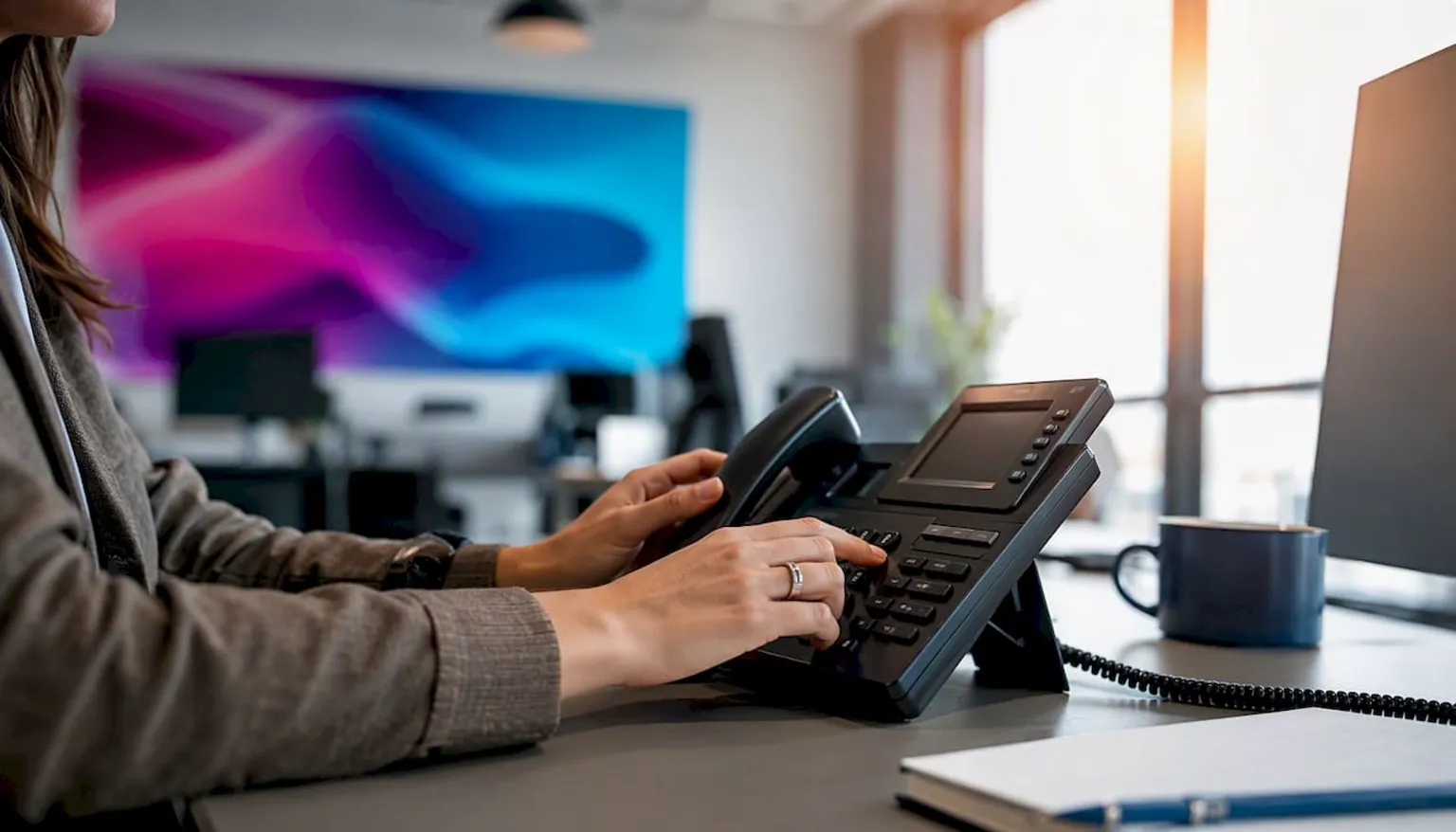



Most missed business is missed quietly. A prospect calls at 10 p.m., hits voicemail, hangs up, and calls the next name on their list. You never see the call. There is nothing to see. For a small business, "24/7 call answering" isn't about heroics at 2 a.m.; it's about not starting each morning already behind.
Here is what a single after-hours inquiry actually becomes with an AI phone receptionist like AlmaTalk, followed end to end, with no step skipped.
The phone rings at 2:07 a.m. and someone answers
AlmaTalk answers around the clock. There's no "our office is closed" recording and no callback-later loop. The caller reaches a voice that greets them, asks how it can help, and listens.
If you serve customers in both official languages, the agent can be configured to open bilingually, detect the language the caller replies in, and continue in it, with a distinct voice per language if you enable that. So a French caller at 2 a.m. isn't stuck talking to an English-only prompt, and vice versa.
If it's a number that has called before, the agent can be set up to recognize the caller and greet them by name in the language they used last time. That recognition is based on the phone number; the memory of what they discussed is written up after the call from the transcript, not pulled live mid-conversation.
Capturing who and what at 2:08 a.m.
The whole point of the call is to leave your morning self with something usable. So the agent captures the two things that matter: who is calling and what they need.
You define your own service categories and urgency levels: the vocabulary of your business, not a generic menu. After the call, AlmaTalk tags the conversation against that taxonomy from the transcript, so a burst pipe and a routine quote request don't land in the same undifferentiated pile. That tagging happens post-call, which is why the summary you read in the morning is already sorted by the categories you care about.
The fork at 2:10 a.m.: book it, or take a message
From here the call goes one of two ways, and both end somewhere real.
If it can be booked
If the caller wants an appointment and you take bookings, the agent can book it live during the call. It respects your working hours and, if you use per-staff schedules, the right person's availability. You can configure it to route a service type to the right team member automatically. The appointment is added to your Google Calendar, Outlook, or Cal.com.
One honest caveat: inbound calendar checking polls periodically rather than instantly, so an external event a colleague added in the last half hour may not yet be visible. If tight double-booking is a risk in your operation, keep a buffer or confirm same-day additions manually.
The agent can also confirm, cancel, or reschedule an existing appointment by phone after verifying the caller's number. Useful for the 11 p.m. "can I move tomorrow's slot" call.
If it needs a person
Not every 2 a.m. call is a booking. Some need a human to weigh in. In that case the agent takes a message to a named staff member from your own directory. It can only send to addresses that already exist in that directory. That is a deliberate security limit, so an after-hours caller can't redirect a message to an arbitrary destination.
If the caller asks to be called back, that request is filed as a real task, not a line buried in a transcript that someone has to remember to read. It lands as an item your team can see, assign, and close.
And if a call genuinely needs a live person right then, the agent can escalate or transfer with context, so whoever picks up isn't starting from "who is this?"
By morning, a summary is already waiting
When your team opens up, the 2:07 a.m. call is a written record, not a mystery. Each call gets a post-call summary: who called, what they wanted, how it was tagged, and what was done: booked, messaged, or flagged for callback. The callback is already a task. The appointment is already on the calendar.
Everything lands in one omnichannel inbox alongside your WhatsApp, SMS, and website-chat conversations, so voice isn't a separate silo. (On website chat and WhatsApp, a staff member can jump in and take over a live conversation; a live phone call stays with the agent, but it will transfer to a person when that's the right move.)
You can layer on reminders, too: appointment reminders in your timezone and language on the channel you choose, plus multi-step follow-up sequences, so a booking made at 2 a.m. still gets its confirmation and nudge.
The honest details worth knowing
A few things a careful business owner will want stated plainly:
- Recording is off by default. Call recording and transcript storage are per-agent settings you turn on. A spoken "this call may be recorded" disclosure can be enabled if you want it; it's off by default.
- Caller memory is stored on our servers, not end-to-end encrypted, with configurable retention. It's a convenience feature you control, not a vault.
- The smart features are opt-in. Language detection, per-language voices, auto-assigning service types, and team capacity are things you configure. They don't switch themselves on.
- You can start from your website. AlmaTalk can build a draft agent from your existing site so it already knows your services; a human on your side reviews it before it goes live.
What it costs
Billing is two parts: a monthly or yearly plan that includes a set credit allowance, plus usage metered in credits (call time is metered in seconds, with a one-credit minimum per call). Paid plans have overage enabled by default, so busy months can run past the included allowance. Everything is charged in CAD, and there's no setup fee. It isn't a flat all-you-can-answer fee; it scales with how much you actually use it.
The takeaway
The value of 24/7 answering isn't that a robot is awake at 2 a.m. It's that the 2 a.m. call turns into something concrete instead of a hang-up you'll never know about: a booked slot, a message to the right named person, a callback task, a morning summary. That's the difference between answering the phone and actually catching the business.
Frequently asked questions
Does the AI actually answer calls at any hour, including overnight and weekends?
Yes. AlmaTalk answers around the clock. There is no closed-office recording or callback loop. Every after-hours call is greeted, handled, and written up, so an overnight or weekend inquiry becomes a booking, a message, or a callback task instead of a missed voicemail.
What happens to a message left after hours, and who gets it?
The agent takes a message to a named staff member from your own directory. For security, it can only send to addresses already in that directory. If the caller asks to be called back, that request is filed as a real, assignable task your team sees in the morning, not just a note buried in a transcript.
Can it book an appointment during an after-hours call?
Yes. If you take bookings, the agent books live during the call, respecting your working hours and per-staff schedules if you use them, and adds the appointment to Google Calendar, Outlook, or Cal.com. Note that inbound calendar checking polls periodically rather than instantly, so a very recently added external event may not be seen right away. Keep a buffer if tight double-booking is a concern.
Will I know what happened on calls I slept through?
Yes. Each call produces a post-call summary: who called, what they needed, how it was tagged against your service categories and urgency levels, and what was done. It's waiting in one inbox alongside your WhatsApp, SMS, and website-chat conversations when your team starts the day.
Are calls recorded?
Only if you turn it on. Call recording and transcript storage are per-agent settings that are off by default, and you can enable a spoken 'this call may be recorded' disclosure if you want one. Caller memory is stored on our servers with configurable retention and is not end-to-end encrypted.
How does pricing work?
It's two parts: a monthly or yearly plan that includes a set credit allowance, plus usage metered in credits, with call time metered in seconds and a one-credit minimum per call. Paid plans have overage enabled by default, and everything is charged in CAD with no setup fee. It scales with actual usage rather than being a flat unlimited fee.